
Replace the chimney as one piece.
Traditional adjustments stack concrete rings, shims and grout on top of the manhole. We cut the whole top out and pour it back as one reinforced concrete set. Same five steps on every manhole, every time.
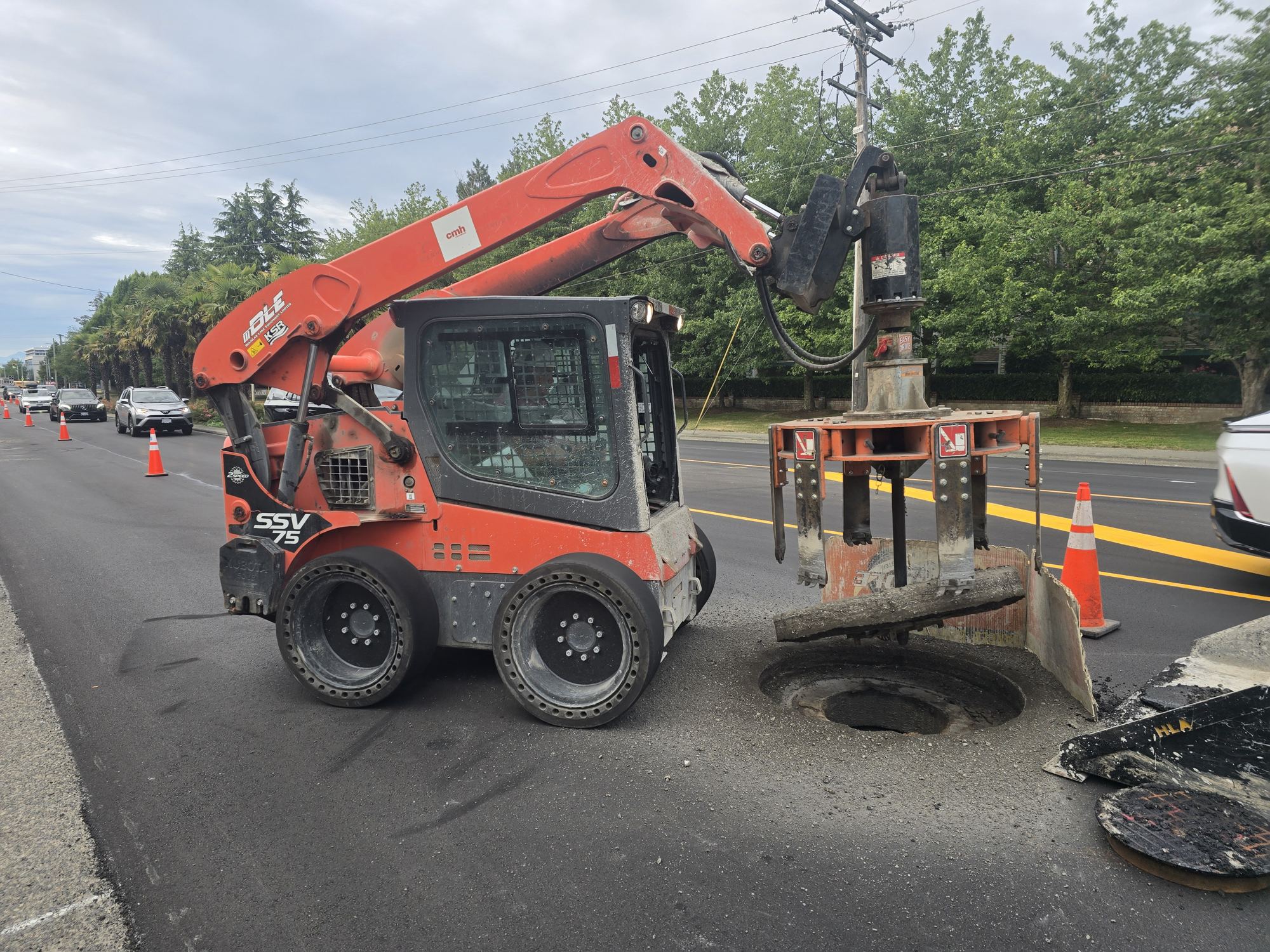
Five steps. About 4 hours to traffic.
Assess
We look at why it failed. The cause is usually the materials: concrete rings, grout and shims that have sunk, cracked or split under traffic.
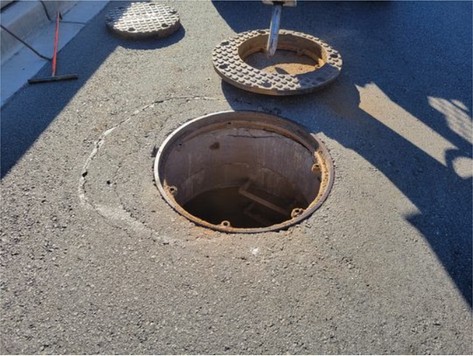
Extract the frame
The cutter takes the casting and the asphalt around it out in one round plug. The machine does the lifting, not the crew.
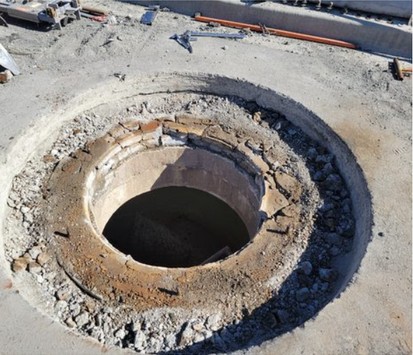
Remove the chimney
The old rings come out and we excavate down to expose the top section of the manhole. Nothing failed gets left behind.
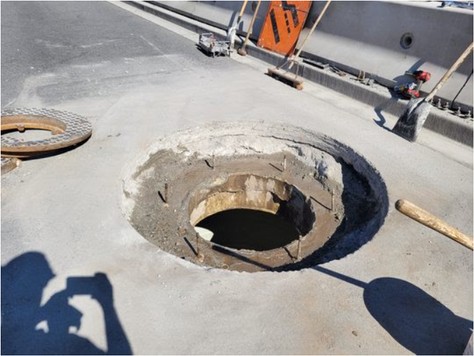
Replace and level
The frame is set dead level to the existing grade. No string line and no guessing.
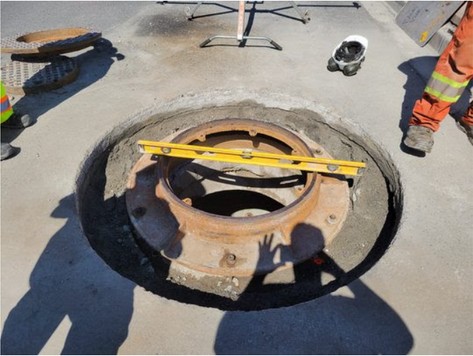
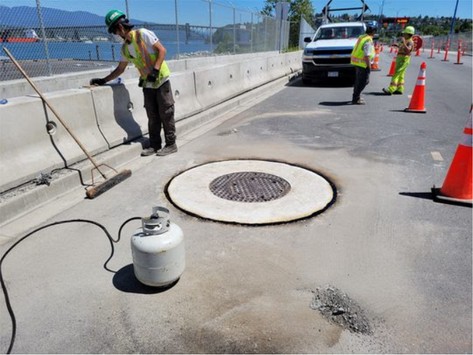
Backfill with concrete
Reinforced high early strength concrete goes in around the frame as one pour, bonded to the casting. 40 MPa minimum at 28 days, typically higher.
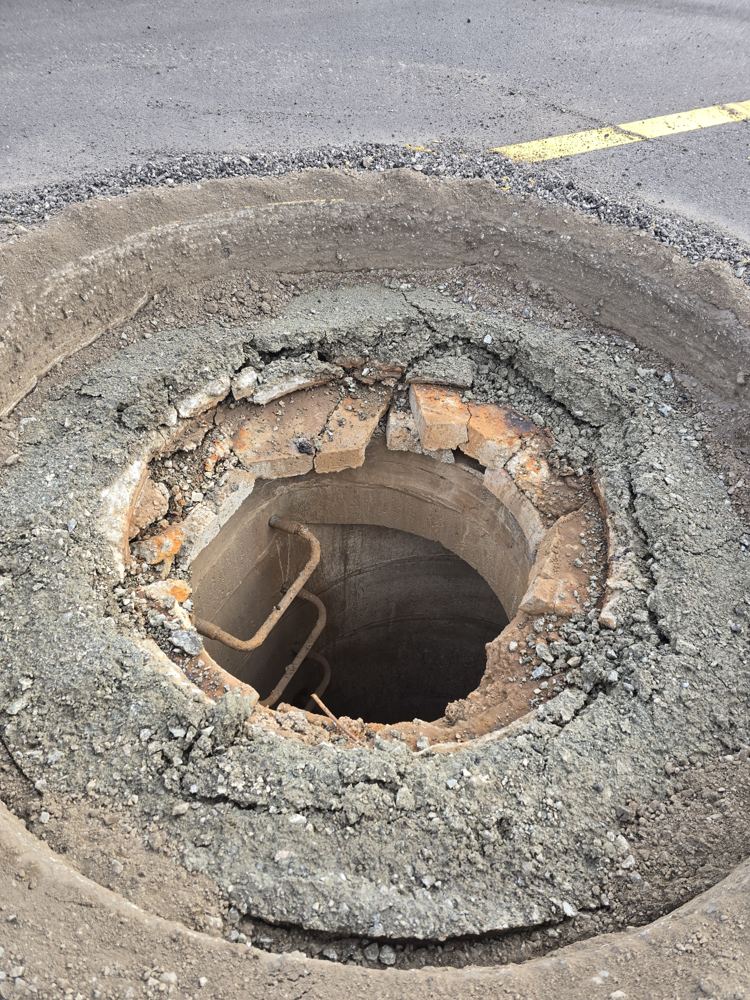
Why stacked rings fail
- Levelling by string line is a best guess.
- Rings and shims shift under traffic loading.
- Grout cracks and opens a path for groundwater.
- Every seam between rings is a place to fail.
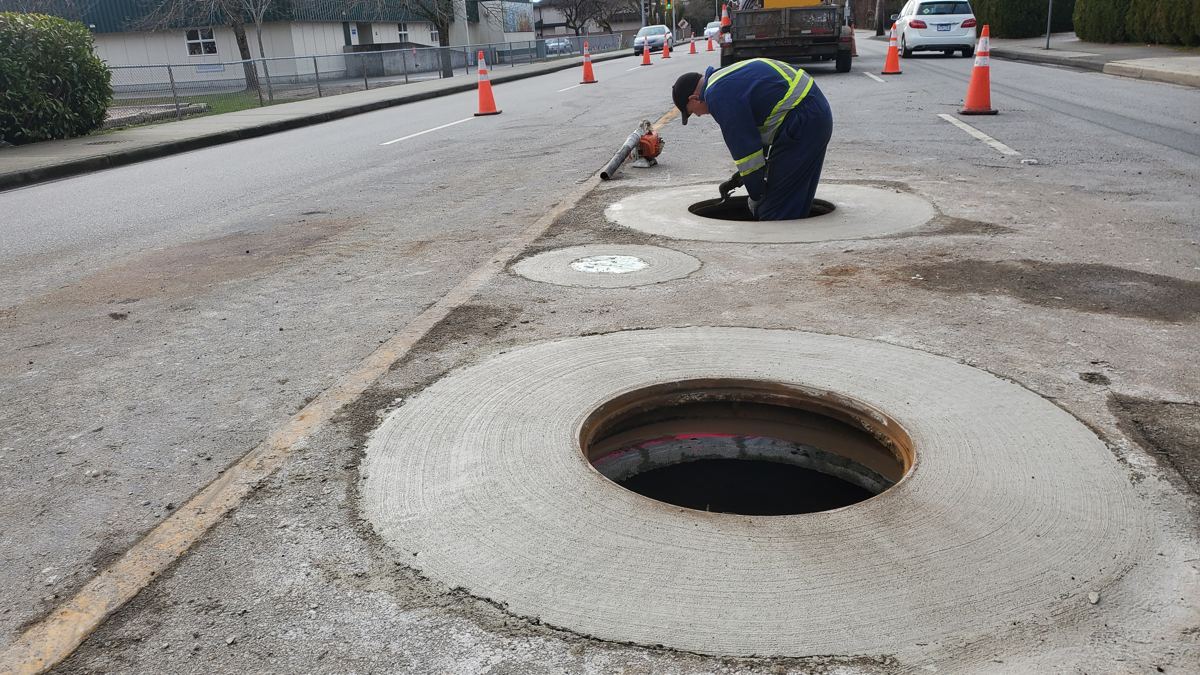
Why one piece lasts
- One reinforced concrete set, no rings, shims or grout.
- Bonded directly to the casting.
- Set dead level to grade.
- No seams, so no way in for water.
For engineers and inspectors.
The detail sheet and our Informed Client Guide cover the materials, the tolerances and what to look for on site. Use them in your spec or your tender package.